
Hair Fall vs Hair Breakage: Causes, Signs, and How to Identify Them
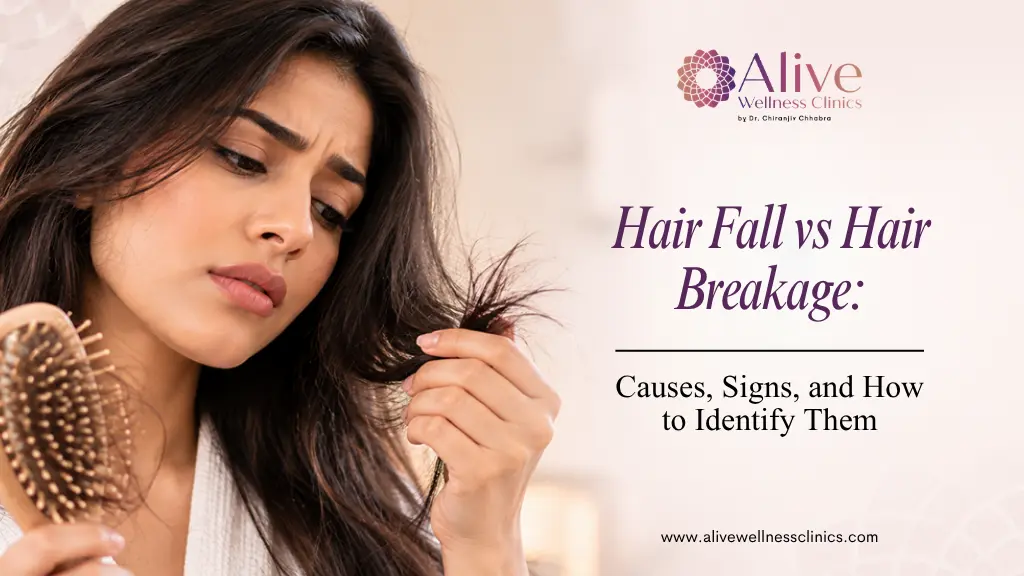
Finding hair while combing or showering doesn't always mean excessive hair shedding. Some strands might simply come loose from the scalp, whereas others could be breaking along their length due to damage. Either way, it can make your hair appear thinner, so telling these apart matters.
Start by examining where the hair is falling or breaking off, then look closely at the strand itself. Hair shedding generally ties back to how your hair grows. Increased shedding can stem from changes in the hair-growth cycle. Scalp conditions can also cause hair loss. Damage along the hair shaft, however, leads to breakage rather than shedding.
Hair Fall vs Hair Breakage: Key Differences
Hair fall and hair breakage affect the hair differently. Hair fall happens when a strand is released from the follicle, while breakage occurs when the hair shaft becomes damaged and snaps along its length.
What to Look At | Hair Fall / Shedding | Hair Breakage |
Where it happens | The complete strand is shed from the scalp | The strand breaks somewhere along its length |
What you may notice | More full-length hairs coming out while washing, brushing, or throughout the day | Shorter pieces of hair, uneven lengths, or increased flyaways |
Changes in your hair | Increased shedding may reduce fullness; a widening part or visible thinning can also indicate progressive hair loss | Frizz, split ends, roughness, and difficulty retaining length |
What may contribute | Changes in the hair-growth cycle, illness, stress, hormonal changes, or certain medicines; genetics can cause progressive thinning | Heat styling, chemical processing, friction, rough handling, or repeated tension |
What to do next | Persistent or noticeable shedding should be assessed to identify the underlying cause | Reduce sources of damage and improve hair-care practices to limit further breakage |
A single loose strand cannot confirm the cause. If you notice persistent shedding, visible thinning, bald patches, or significant changes in your hair, a dermatologist can examine the scalp and hair to determine what is happening.
What Is Hair Fall?
Hair fall commonly refers to hair shedding from the scalp. Some daily shedding is normal and occurs as part of the natural hair-growth cycle, but when you begin losing noticeably more hair than usual, it may be increased shedding. Progressive thinning is different and is usually seen as a gradual reduction in hair density, a widening part, a thinner ponytail, or a receding hairline.
Common Causes of Increased Hair Fall
Increased shedding can have several causes.
Physical Stress or Illness:
Fever, surgery, significant weight loss, or recovery from an illness can trigger increased shedding, sometimes appearing a few months later.
Hormonal Changes:
Hormonal changes after childbirth, during menopause, or due to thyroid problems can affect the hair-growth cycle.
Hereditary Thinning:
Genetic hair loss can cause gradual thinning, a widening part, or a receding hairline rather than sudden shedding. It may coexist with increased shedding.
Nutritional Issues:
Low levels of nutrients such as iron or inadequate protein intake may contribute to hair loss in some people.
Medications:
Certain medicines and medical treatments can affect the hair-growth cycle and lead to increased shedding or hair loss.
Scalp Conditions:
Infections and inflammatory scalp conditions can interfere with normal hair growth and may cause hair loss.
Because several factors can produce similar symptoms, persistent or noticeable hair fall is best assessed by a dermatologist rather than attributed to a single cause.
Also Read: Hair Transplant Cost in India: How It’s Calculated
What Is Hair Breakage?
Hair breakage happens when the hair shaft snaps along its length, while the follicle remains in the scalp. Unlike hair fall, where a complete strand is shed from the scalp, breakage usually leaves behind shorter, uneven pieces of hair. You may also notice frayed or split ends, roughness, increased flyaways, and difficulty retaining hair length.
Common Causes of Hair Breakage
Hair can become weaker when it is repeatedly exposed to physical stress or damaging treatments. Common causes include:
Heat Styling:
Frequent use of straighteners, curling irons, and high-heat blow-drying can weaken the hair shaft.
Bleaching & Chemical Processing: Bleaching, colouring, perming, and other chemical treatments can make hair more fragile and prone to breakage.
Rough Brushing:
Pulling through tangles or brushing the hair too aggressively can cause strands to snap.
Friction:
Repeated rubbing against towels, pillows, clothing, or other surfaces can contribute to mechanical damage.
Repeated Tension:
Tight ponytails, buns, braids, and other hairstyles that constantly pull on the hair can increase the risk of breakage. Prolonged or repeated pulling can also cause traction alopecia, a form of hair loss.
Also Read: Find Best Hair Transplant Clinics in Delhi
How to Identify Hair Fall vs Hair Breakage at Home
If you are unsure whether you are experiencing hair shedding or breakage, a few simple observations can help you understand the pattern. These checks can give you useful clues, but they cannot diagnose the underlying cause of hair loss. If the change is persistent or noticeable, a dermatologist can examine your scalp and hair more accurately.
Check the End of a Loose Strand
Look closely at a strand that has fallen out. A naturally shed strand may have a small, pale or club-shaped bulb at one end, while a broken strand usually has a more irregular or snapped-looking end. However, the presence or absence of a bulb alone cannot confirm whether you have hair fall or breakage, so it should only be treated as one clue.
Compare the Lengths of Loose Hair
Pay attention to the length of the hair you are finding. If you are mostly seeing longer, complete strands, this may suggest shedding from the scalp. A noticeable number of short, uneven pieces can point towards breakage, particularly when they are accompanied by split or frayed ends.
Look at Changes in Your Hair
The overall pattern can tell you more than a single strand. Reduced density, a widening part, a thinner ponytail, or a receding hairline may indicate a hair-loss or thinning pattern. On the other hand, split ends, uneven lengths, flyaways, and rough-looking ends can be signs of damage and breakage.
Review When the Change Started
Think about what was happening around the time you first noticed the change. Recent illness, high fever, major stress, weight changes, or hormonal changes may be relevant when investigating increased shedding. For breakage, consider whether you recently increased heat styling, colouring, bleaching, or chemical treatments, started wearing tight hairstyles, or changed your hair-care routine. Keeping track of these changes can give your dermatologist useful information during a consultation.
Can Hair Fall and Hair Breakage Happen Together?
Yes. Hair fall and hair breakage can occur at the same time, even though they affect the hair differently. For example, you may have increased shedding from the scalp while heat styling or chemical treatments are causing the lengths of your hair to become weak and break.
This is why noticing more hair in your brush does not always point to a single cause. A dermatologist can assess both the scalp and hair shaft to determine whether you are experiencing shedding, breakage, or a combination of both.
Also Read: Is Hair Transplant Permanent? Myths vs Facts Explained
What to Do About Hair Fall or Hair Breakage
If You Notice Increased Shedding
There is no single solution for increased hair fall because the cause can vary from recent illness or physical stress to hormonal changes, medications, or scalp conditions. Hereditary hair loss can cause progressive thinning and may coexist with increased shedding. If shedding is sudden, persistent, or accompanied by visible thinning, it is worth consulting a dermatologist to identify the underlying cause before starting any treatment or supplements.
If You Notice Breakage
When breakage is the main concern, the focus should be on reducing further damage to the hair shaft. Detangle gently, use conditioner regularly, limit excessive heat and chemical processing, and avoid hairstyles that repeatedly pull or put tension on the hair. Reducing friction and handling the hair more gently can also help minimise future breakage.
Once a strand has split or broken, the damaged section cannot be permanently restored. Hair care can help protect the remaining length and reduce further breakage while hair continues to grow from an intact follicle.
Also Read: Hair Clinic in Hyderabad: Trusted Dermatologists & Advanced Hair Treatments
When Should You Consult a Dermatologist?
You should consider a dermatology consultation if you notice:
Sudden or patchy hair loss
A visibly widening part or a noticeable reduction in hair density
A receding hairline that is becoming more noticeable
Persistent or increased hair shedding
Scalp symptoms such as pain, itching, redness, or inflammation
During the consultation, a dermatologist can review your hair-loss history, examine your scalp and hair, and determine whether any further tests are needed to identify the underlying cause.
Get Personalised Hair Care at Alive Wellness Clinics
If you are facing hair fall, visible thinning, or frequent hair breakage, understanding the cause is the first step towards finding suitable care. At Alive Wellness Clinics, you can consult a hair specialist to assess your scalp and hair, discuss your symptoms and hair-care routine, and explore appropriate treatment or care options based on your needs.
Whether you are noticing more strands in your brush or struggling with damaged, uneven lengths, seek guidance to understand what your hair needs. Book your consultation at Alive Wellness Clinics today.