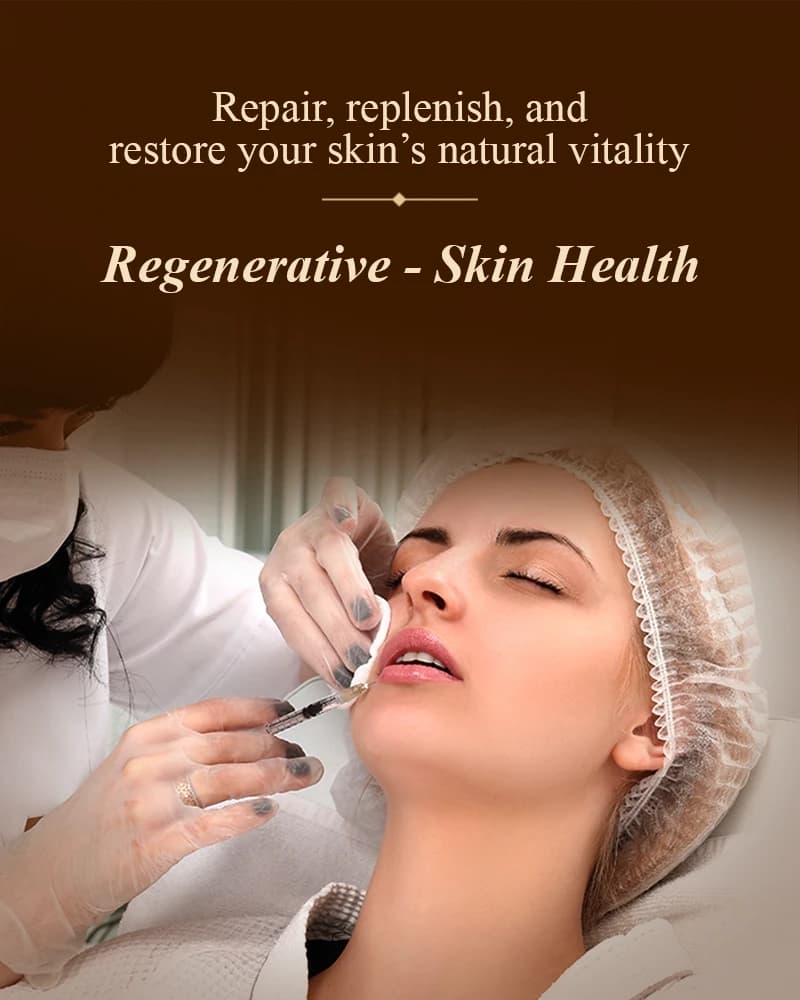
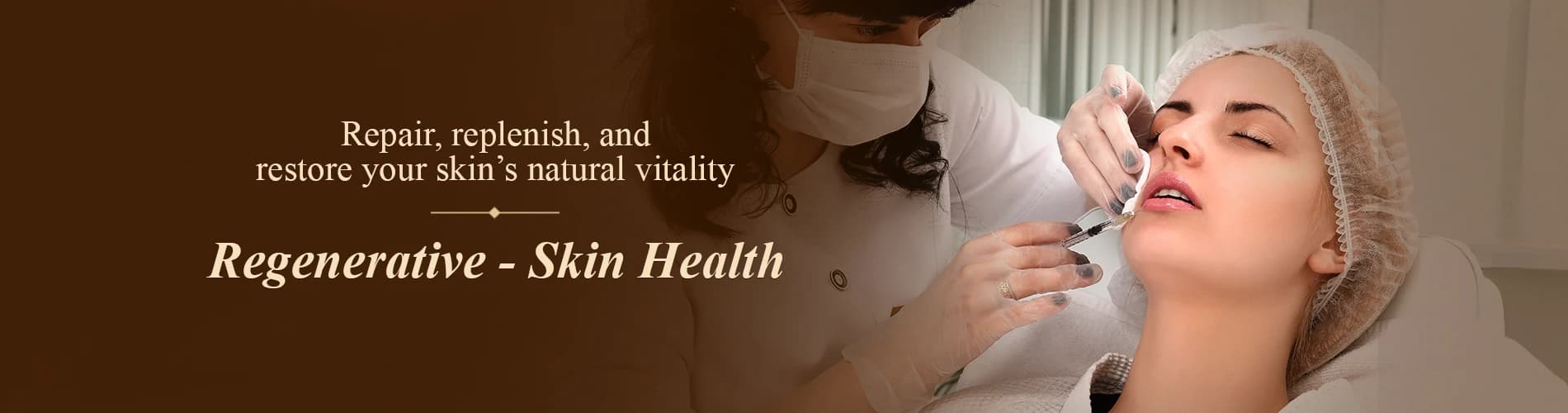
Regenerative Skin Health Treatments at Alive Wellness Clinics
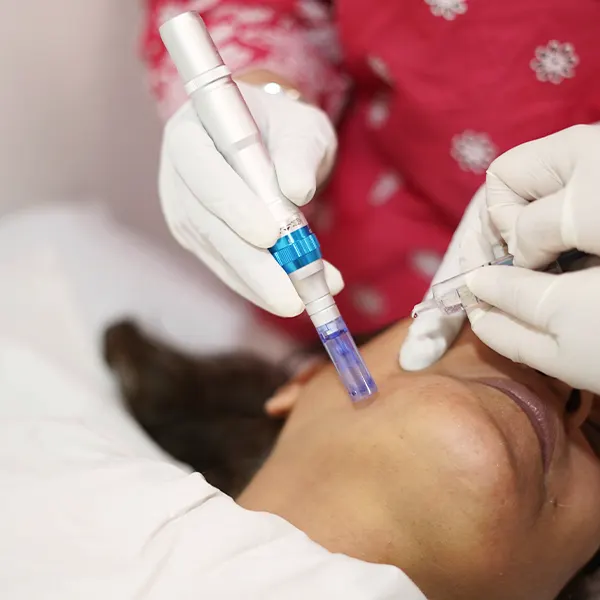
Traditional skin treatments, though, treat you superficially but do not provide lasting results. Our range of regenerative treatments targets the core factors of ageing like collagen depletion, oxidative stress, and reduced cell renewal. Our regenerative treatments utilises the body’s own natural healing ability to combat signs of ageing. These regenerative treatments not only reduce wrinkles, fine lines, and pigmentation but also work to restore your youthful, radiant complexion. Our advanced skin treatments boost collagen production and stimulate cell regeneration. It smooths out imperfections and enhances your skin’s vitality. We have state-of-the-art technology and research-driven formulas. Each treatment we tailor is personalised to ensure optimal results.
Types of Regenerative Skin Health Treatment
FAQs About Regenerative Skin Health Treatment
The best treatment depends on your specific needs. It is advisable to consult with an expert to determine the most suitable option, such as PRP/GFC, exosome therapy, or an advanced facial.
Ready to Start Your Wellness Journey?
Book a personalised consultation with our experts and discover treatments tailored to your goals.