Q-Switch Laser Treatment in Hyderabad: Benefits, Cost, Procedure & Results
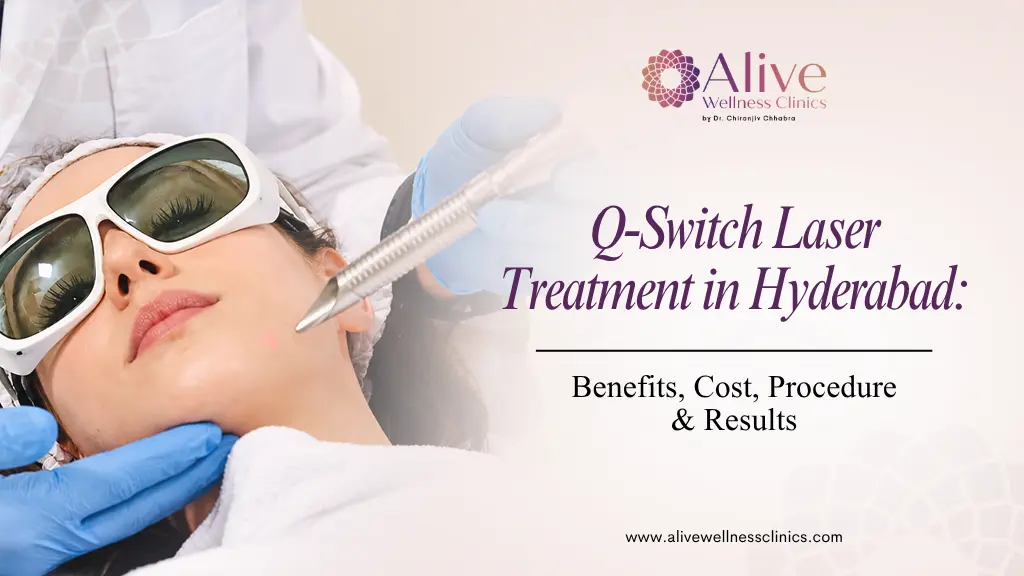
Pigmentation, dark spots, and uneven skin tone can make the skin look dull and uneven, even with regular skincare. When topical products aren't enough to address stubborn pigmentation, Q-switch laser treatment offers a more targeted approach by using controlled laser energy to break down excess pigment.
But how does Q-switch laser treatment work, what concerns can it address, and how many sessions might you need? Here's what to know about the procedure, benefits, results, cost, and possible side effects.
What Is Q-Switch Laser Treatment?
Q-switch laser treatment is a laser treatment whereby short pulses of high energy are used to target the extra pigment in the skin. The laser energy is absorbed by the pigmented lesions, which breaks down the pigment into fine particles that the body can eliminate gradually. Q-switched lasers are commonly used to treat pigmentation, dark spots, birthmarks, and tattoo ink.
Unlike facials or topical skincare products, Q-switch laser therapy penetrates the skin to target the pigments directly, not just smoothing out the skin's surface. The precise laser wavelength and parameters used depend on the kind of pigmentation, the location to be treated,d and skin type.
How Does Q-Switch Laser Treatment Work?
Q-switch laser treatment uses short, controlled pulses of laser energy to target excess pigment in the skin. The process works in a few key steps:
01. Targeted Laser Energy:
The laser is directed at the pigmented area using settings selected according to the concern and skin type.
02. Pigment Absorption:
The excess melanin absorbs the laser energy while the surrounding skin is treated as selectively as possible.
03. Pigment Fragmentation:
The energy breaks the targeted pigment into much smaller particles.
04. Natural Clearance:
These pigment fragments are gradually cleared by the body's natural processes.
05. Gradual Improvement:
As the pigment clears, the treated area may appear lighter and more even. The number of sessions required varies with the type and depth of pigmentation.
What Skin Concerns Can Q-Switch Laser Treat?
Q-switch lasers are primarily used for concerns involving excess or unwanted pigment. However, the suitability of treatment depends on the type of pigmentation, its depth, skin type, and underlying cause.
Pigmentation and Dark Spots:
Q-switch laser can target excess melanin responsible for certain forms of pigmentation and dark spots, helping them appear lighter over a course of treatment.
Melasma:
Melasma can be more complex than other pigmentation concerns. Q-switch laser may be considered in selected cases, but it requires careful assessment and conservative treatment because pigmentation can recur and pigmentary changes may occur.
Sunspots and Sun Damage:
Sunspots and other localised areas of sun-induced pigmentation may respond to targeted laser treatment, depending on their characteristics.
Acne Marks:
Q-switch laser may help reduce post-inflammatory pigmentation left behind after acne. It targets the excess pigment rather than treating active acne itself.
Freckles:
Freckles are pigment-producing spots that may become lighter with laser treatment. They can also become more noticeable again with sun exposure.
Uneven Skin Tone:
When uneven tone is related to excess pigmentation, targeted treatment may help create a more uniform appearance.
Birthmarks:
Certain pigmented birthmarks may be treated with Q-switched lasers, although suitability depends on the type and characteristics of the birthmark.
Tattoo Removal:
Q-switched lasers are also widely used for tattoo removal. Different wavelengths may be selected depending on the colours and type of tattoo ink present.
Important: Results vary according to the type, depth, and cause of pigmentation, as well as skin type and individual response. A dermatologist should assess the concern before deciding whether Q-switch laser treatment is appropriate.
Benefits of Q-Switch Laser Treatment
When appropriately selected for the type of pigmentation, Q-switch laser treatment can offer several benefits:
Helps reduce the appearance of unwanted pigmentation and dark spots
Can lighten certain acne-related pigmentation
Helps improve uneven-looking skin tone
Can leave the skin looking brighter and more even
Minimally invasive, without surgical incisions
Typically involves little downtime, although temporary redness or sensitivity may occur
Laser settings can be adjusted according to the concern and treatment area
Can be used on selected areas of the face and body
The Q-switch laser benefits you may experience depend on the type of pigment being treated, your skin type, and how your skin responds to treatment. For concerns such as pigmentation and dark spots, a dermatologist can determine whether Q-switch laser for pigmentation is appropriate for you.
Who Is a Good Candidate for Q-Switch Laser Treatment?
Q-switch laser treatment may be considered for people concerned about:
Stubborn pigmentation or dark spots
Sunspots and uneven skin tone
Acne-related pigmentation
Freckles or selected birthmarks
Certain unwanted tattoos
Before treatment, a dermatologist should examine the skin to identify the type and cause of pigmentation and determine whether laser treatment is appropriate. Extra care may be needed if you have an active skin infection, highly sensitive skin, a history of pigmentary changes, or certain medical conditions.
Q-Switch Laser Treatment at Alive Wellness Clinics
Step 1 – Skin Check
The treatment begins with a thorough examination of your pores and skin. The dermatologist examines the colour spots, how deep they're, wherein they're, and your pores and skin's overall health. Based on this, they determine if the Q-transfer laser is right for you. Then, they create a plan that suits your unique desires.
Step 2 – Preparing the Skin
Before starting, the area being treated is cleaned well to remove any makeup, oil, or dust. You'll also receive eye protection to keep your eyes safe throughout the treatment.
Step 3 – Applying the Laser
The dermatologist uses laser pulses cautiously on the area you need to treat. The kind of laser used depends on the kind of pigmentation, the area being treated, and your pores and skin type. You may sense a warm sensation or a quick snapping feeling as the laser works.
Step 4 – Aftercare
After the treatment, your skin might be slightly crimson or feel warm and sensitive for a touch whilst. A calming product is applied to assist in soothing the pores and skin, and you'll be given sunscreen to defend it from the sun.
Step 5 – Follow-Up
Your dermatologist will test how your skin is doing and decide if more treatments are needed. The time between remedies depends on the form of pigmentation, how your pores and skin react, and the overall plan.
How Many Q-Switch Laser Sessions Are Required?
There is no fixed number of sessions, as treatment requirements vary depending on the type and depth of pigmentation, skin type, treatment area, individual response, and desired results. Mild pigmentation may show improvement sooner, while deeper pigmentation or tattoos may require more sessions. Consistent aftercare and sun protection can also influence the overall outcome.
Q-Switch Laser Treatment Cost in Hyderabad
The Q-switch laser treatment cost in Hyderabad can vary. The final price depends on factors such as:
Size of the treatment area
Type and severity of pigmentation
Number of sessions required
Laser technology and settings used
Dermatologist’s expertise
Whether the treatment is for the face, body, or tattoo removal
The Q-switch laser price in Hyderabad should ultimately be discussed during your consultation based on the treatment plan recommended for your skin.
Q-Switch Laser Before and After Results
Results from Q-switch laser treatment develop gradually as the targeted pigment is cleared. Pigmentation may appear lighter, while the skin can look clearer and more even-toned over time. The number of sessions required depends on the type and depth of pigmentation and how your skin responds to treatment.
Aftercare Tips Following Q-Switch Laser Treatment
Proper aftercare helps protect the treated skin and supports recovery. Your dermatologist may recommend that you:
Protect your skin from the sun:
Apply sunscreen as advised and avoid prolonged direct sun exposure.
Keep the skin gentle: Use mild skincare products and avoid harsh scrubs or active ingredients until your skin has recovered.
Avoid touching the area:
Do not scratch, rub, or pick the treated skin.
Limit heat exposure:
Avoid excessive heat, steam, and strenuous workouts for the period recommended by your dermatologist.
Follow your treatment plan: Follow all post-treatment instructions and attend recommended follow-up appointments.
Authentic, consent-approved before-and-after photographs from Alive Wellness Clinics can be included to demonstrate individual treatment results.
Possible Side Effects of Q-Switch Laser Treatment
Q-switch laser treatment is generally well tolerated when performed with appropriate settings, but temporary skin reactions can occur after a session. These may include:
Mild redness or slight swelling
Warmth or sensitivity in the treated area
Temporary darkening or lightening of the skin
Mild dryness or flaking
These effects usually settle as the skin recovers. However, incorrect laser settings or inadequate aftercare can increase the risk of burns and unwanted pigment changes. For this reason, treatment should be performed by a qualified professional following an appropriate skin assessment.
Q-Switch Laser vs Chemical Peel
Both treatments can be used for pigmentation, but they work differently and are suited to different skin concerns. A chemical peel uses a selected chemical solution to exfoliate the outer layers of the skin, while a Q-switch laser uses controlled laser energy to target pigment more selectively.
Factor | Q-Switch Laser | Chemical Peel |
How it works | Uses short laser pulses to target excess pigment | Uses a chemical solution to exfoliate affected skin layers |
Commonly considered for | Stubborn pigmentation, dark spots, selected acne-related pigmentation and tattoos | Superficial pigmentation, acne marks, dullness and uneven tone |
Treatment approach | Laser wavelength and energy settings are adjusted to the concern and skin | Peel type and strength are selected according to the skin and concern |
Downtime | Usually limited, although temporary redness or sensitivity may occur | Varies with the type and strength of the peel |
Number of sessions | Depends on pigmentation type, depth, and response | Depends on the peel used and the skin concern |
Key consideration | Requires careful settings, particularly for pigmentation-prone skin | Requires appropriate peel selection to avoid excessive irritation |
Why Choose Alive Wellness Clinics for Q-Switch Laser Treatment in Hyderabad?
At Alive Wellness Clinics, the laser Q- switch treatment is prescribed after assessing the skin, pigments of your skin, and your complaints. The technique used depends on individual patient needs and treatment settings, including a professional setting and follow-up care, instead of having one formula that fits all for each and every patient.
With over 25 years of dermatology experience, Alive Wellness Clinics brings a wealth of dermatology experience with the most up-to-date aesthetic technology and a scientific approach to aesthetic treatments. Our dermatologist will also be able to give you an idea of what to expect from the treatment, how many sessions it would take, and what sort of aftercare would be required depending on the individual problem you have been experiencing.