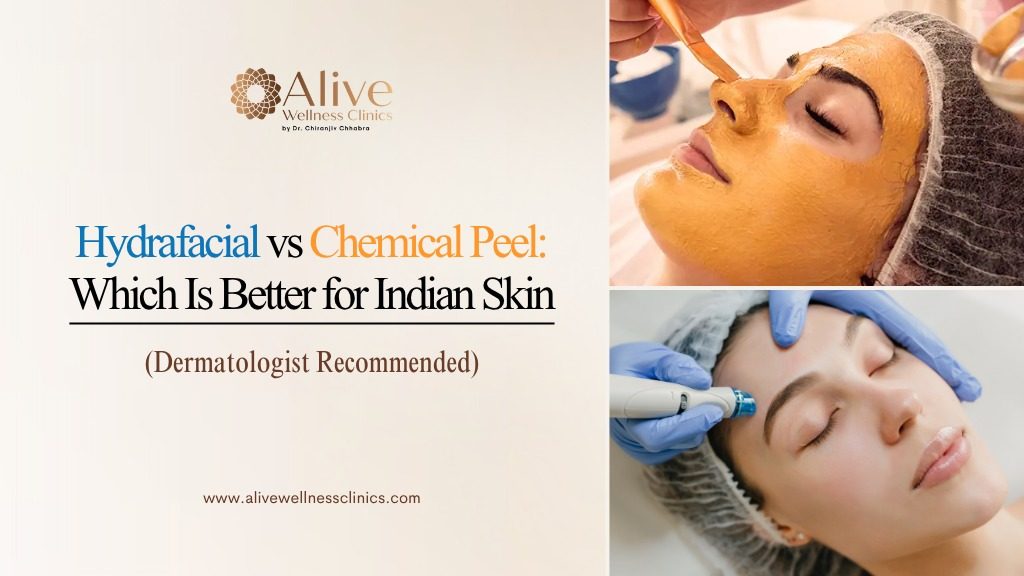
Among the most popular skin treatments for glowing & clear skin, Hydrafacial & chemical peel are trending in India. Especially for those who are obsessed with clear skin. Considering all the pollution, sweaty humidity & harsh sun that Indian skin suffers from, you want something effective & doesn’t exacerbate the things. But which is better for Indian skin? Hydrafacial or Chemical peel?
Understand the Basics – Hydrafacial vs Chemical Peel
What is a Hydrafacial?
A Hydrafacial is generally a robust approach to a facial, non-invasive & a multi-step process that utilises a special machine. The machine cleanses, exfoliates & extracts the dirt & impurities from the skin while integrating hydrating serums into the skin. The real star – HydraDermabrasion tool, it uses vortex suction ot remove dead skin cells & deep dirt from clogged pores, while delivering antioxidants, peptides & hyaluronic acid where you want them.
So what do you really get from it? Deep hydration. Deeply cleanses pores (yes, even blackheads). Skin that feels tighter and appears smoother vs before. Plus, you get that instant glow, and there’s no downtime, walk out and you’re ready for anything.
Honestly, it’s perfect if you want your skin to look its best before a big event, a wedding, or a photoshoot. Quick, visible results, no fuss.
What Is a Chemical Peel?
A chemical peel generally means to put a special acidic solution like glycolic, lactic, salicylic or TCA on your skin. This helps shed the top layer & pushes your skin to renew itself. People use chemical peels to fade dark spots, smooth out acne scars, soften fine lines & even out skin tone.
There are different types, depending on how deep they go:
- Superficial peels offer light exfoliation and you barely need any recovery time.
- Medium peels go a bit deeper, working on pigmentation and mild scarring.
- Deep peels tackle serious wrinkles and more severe skin damage.
Chemical peels can make a huge difference, but picking the right one matters especially for Indian skin, which can react with extra pigmentation if you’re not careful. Aftercare is just as important as the treatment itself.
Hydrafacial vs Chemical Peel: Key Differences for Indian Skin
| Factors | Hydrafacial | Chemical Peel |
| Treatment Type | Non-invasive, machine-based | Chemical exfoliation |
| Skin Type Suitability | Suitable for all skin types, even sensitive skin | Must be customised; not all peels suit darker skin tones |
| Downtime | Zero downtime | 1–7 days, depending on peel strength |
| Instant Results | Immediate glow and hydration | Takes 3–5 days to see visible results |
| Pain or Discomfort | Painless and relaxing | Mild stinging or peeling sensation |
| Frequency | Every 4–6 weeks | Every 6–8 weeks |
| Best For | Dehydration, dullness, mild pigmentation | Acne, pigmentation, fine lines, and texture correction |
Which Treatment Is Safer for Indian Skin?
As Indian skin has more melanin, it is quick to react against strong chemicals or lasers. Over-exfoliate or use a very strong peel and you are likely to end up with post-inflammatory hyperpigmentation, commonly called dark spots.
That is why Hydrafacial works so well because it’s gentle, can be tailored and thus never irritating. It’s a good fit for Fitzpatrick skin types III to V, which are common in Indian skin tones. The benefits of hydration do not stop there, but actually help in the rebuilding of the skin barrier and in calming down redness or sensitivity.
That doesn’t necessarily mean chemical peels are a no-go. If you have a dermatologist leading the way, they can recommend milder options like lactic acid or mandelic acid; these will give you all the benefits of exfoliation with less risk of irritation to your skin.
Hydrafacial for Indian Skin: Why It’s Favourite
Hydrafacial is pretty much the top pick for anyone in India who wants that instant glow, no weird side effects & no downtime. Here’s what makes it stand out:
- It deep cleanses the skin & sweeps away all the pollution particles & extra oil that just seem to stick around, especially if you live in a big city.
- At places like Alive Wellness Clinics, they mix the serums just for you. Whether you are opting for brighter skin, want to slow down ageing or just need to cop with breakouts, they are here to tackle all the problems & will find you the best solutions.
- The hydration boost feels great, too. Hyaluronic acid and antioxidants jump in to bring back some real moisture, so your skin looks and feels fresh.
Best part? There’s no recovery time. If you’re always on the go or have a big event coming up, you can walk in, get a Hydrafacial, and step out looking ready.
No wonder celebrities and influencers are into it. It makes makeup go on smoother, and over time, your skin just looks better.
Chemical Peel Benefits for Indian Skin
Hydrafacial might be getting all the limelight these days, but chemical peels still make a big difference in advanced skincare. Whether it’s acne scars, stubborn pigmentation, or sun damage, peels can really make a difference. They make dark spots and melasma a bit lighter, clean pores so that no more breakouts occur, improve texture by kicking up collagen, and lighten tanning or discolouration.
But here’s the thing-if you have Indian skin, stick with mild peels and always let your dermatologist lead you. Strong or deep peels? Avoid them unless your doctor says so.
Which Is Better for Pigmentation and Acne Scars?
If you are opting for the major concerns like dark spots, acne marks, pigmentation or uneven skin tone, a chemical peel will get you changes sooner. Medium-depth peels, like glycolic acid or TCA, you can go after those pigment cluster & kick-start your skin’s natural renewal.
But, if you have sensitive or combination skin, you must need to look for Hydrafacial with a brightening serum like Vitamin C or Kojic acid. It will help you in smoother & brighter look without the sting.
Honestly, a lot of dermatologists mix things up and combine Hydrafacial with a mild chemical peel. That way, you get both hydration and exfoliation in one go.
Post-Treatment Care: Essential for Both
No matter which treatment you go for, how you take care of your skin after the procedure shapes your results.
If you’ve just had a Hydrafacial, avoid makeup and heavy creams for the next 24 hours. Only use a lightweight, hydrating moisturiser and set your daily routine to include SPF 30+ each day.
Avoid peeling or scratching any flaking skin after a chemical peel. Do not use anything other than mild cleansers and healing ointments. Avoid the sun and exfoliating products for at least one week after the peel.
Paying attention to these steps keeps your skin from getting irritated and helps you get that healthy, glowing look.
Cost Comparison in India
| Treatment | Average Cost per Session | Maintenance Frequency |
| Hydrafacial | ₹4,000 – ₹10,000 | Once every 4–6 weeks |
| Chemical Peel | ₹2,000 – ₹7,000 | Once every 6–8 weeks |
While Chemical Peels are slightly more affordable, Hydrafacial offers a higher comfort level and instant gratification, making it worth the investment for those who prefer no downtime.
Expert Recommendation: Which One Should You Choose?
If you have dull, dry or tired skin, you must try a Hydrafacial treatment for your skin. But if you are worried about acne scars, dark spots or early signs of ageing, you need an expert for the Chemical Peel treatment. For best results, many experts suggest mixing to start with a few gentle peels to refresh your skin & then to switch monthly to Hydrafacials to get that glow. At Alive Wellness Clinics, dermatologists actually take time to look after your skin tone, history & what you want before they build a plan that fits your skin & the Indian climate.
Final Verdict: Hydrafacial or Chemical Peel for Indian Skin
Hydrafacial and chemical peels are the stars of skincare. But Hydrafacial always tops the list when it comes to Indian skin, as it is far safer, faster and doesn’t require any downtime. Still, mixing and matching can yield pretty fabulous results.
Chasing healthy, glowing skin is not just a matter of following the trend; it’s knowing what works for your skin and letting the qualified dermatologists help you find the right path.
Frequently Asked Questions
Both treatments are effective, but Hydrafacial is generally safer for Indian skin as it’s non-invasive, hydrating, and suitable for all skin types. Chemical Peels, when customised by a dermatologist, are great for targeting pigmentation and acne scars.
Hydrafacial helps in reducing pigmentation and improving brightness, but it does not remove pigmentation permanently. Regular sessions combined with sun protection can significantly lighten dark spots over time.
For optimal results, Hydrafacial can be done once every 4–6 weeks, while Chemical Peels are typically recommended every 6–8 weeks, depending on skin type and concern.
Mild redness, dryness, or peeling can occur after a chemical peel. If performed by professionals using the right strength and type of peel, side effects are minimal and temporary.
Hydrafacial gives an instant glow and hydration right after the session, whereas Chemical Peels take about 3–5 days for the full results to appear once the skin has renewed itself.
Yes, many dermatologists recommend combining mild chemical peels and Hydrafacial sessions to achieve both exfoliation and hydration benefits safely.
Chemical Peels are usually more affordable, ranging from ₹2,000–₹7,000 per session, while Hydrafacial treatments cost around ₹4,000–₹10,000 per session, depending on the clinic and customization.